Why Every Progressive Indian School Needs a Unified Management System in 2026
Step into the office of a progressive Indian school today, and you will see a fascinating paradox. On the classroom walls, smart boards are rendering interactive science modules. Students are exploring coding challenges, and teachers are utilizing digital textbooks. The curriculum is modern, forward-thinking, and designed for the digital age.
Yet, walk down the hall to the administrative wing, and you step back in time. You will find clerks digging through dusty steel almirahs to locate a student's admission form from three years ago. Accountants are manually cross-checking bank passbooks against paper receipt books. Teachers are huddled in the staff room, manually copying grades from their personal diaries into massive, handwritten academic report registers.
To manage communication, the school has created a dizzying array of WhatsApp groups—one for every section, bus route, and sports team. The principal is constantly managing complaints, teachers are fielding late-night parent inquiries, and critical circulars are lost in a sea of chat messages.
This is the cost of administrative fragmentation. When your academic operations are divided across legacy software, paper registers, disconnected Excel sheets, and social messaging apps, your institution is losing hours of productivity every single day.
In 2026, progressive schools are realizing that true digitization is not about having several disconnected software applications; it is about building a unified, integrated operational ecosystem. This guide explores why a unified platform is no longer an optional luxury, but a critical foundation for modern educational leadership.
The Cost of Disconnected Systems: "Software Fatigue"
In the early days of educational technology, schools typically bought software to solve single, isolated problems. They acquired an SMS tool for parent notifications, an offline accounting software for fees, an biometric machine for staff attendance, and used Excel for everything else.
While this solved immediate issues, it created a severe secondary problem: **Software Fatigue.**
1. The Data Entry Loop
When systems do not talk to each other, administrative staff must enter the same student data multiple times. When a new student enrolls, their name, parent details, and class assignment must be typed into the admissions system, then into the fee software, then into the SMS alert system, and finally into the classroom registry. A single typo in a mobile number can mean a parent never receives critical fee alerts or emergency holidays announcements.
2. The Loss of a Single Source of Truth
If a parent calls to update their home address or phone number, who records it? If they tell the class teacher, it gets updated in the attendance register. However, the fee clerk still has the old address on file, and the bus driver continues to drop the child at the previous location. Without a single, centralized database, administrative errors are inevitable, leading to a breakdown in parental trust.
3. Security and Compliance Vulnerabilities
Fragmented systems often have weak security boundaries. When student performance records, parent contact details, and financial ledgers are scattered across various computers and unsecured spreadsheets, your institution is highly vulnerable to data leaks and unauthorized modifications, posing a severe compliance risk.
1. The Power of a Unified Operational Ecosystem
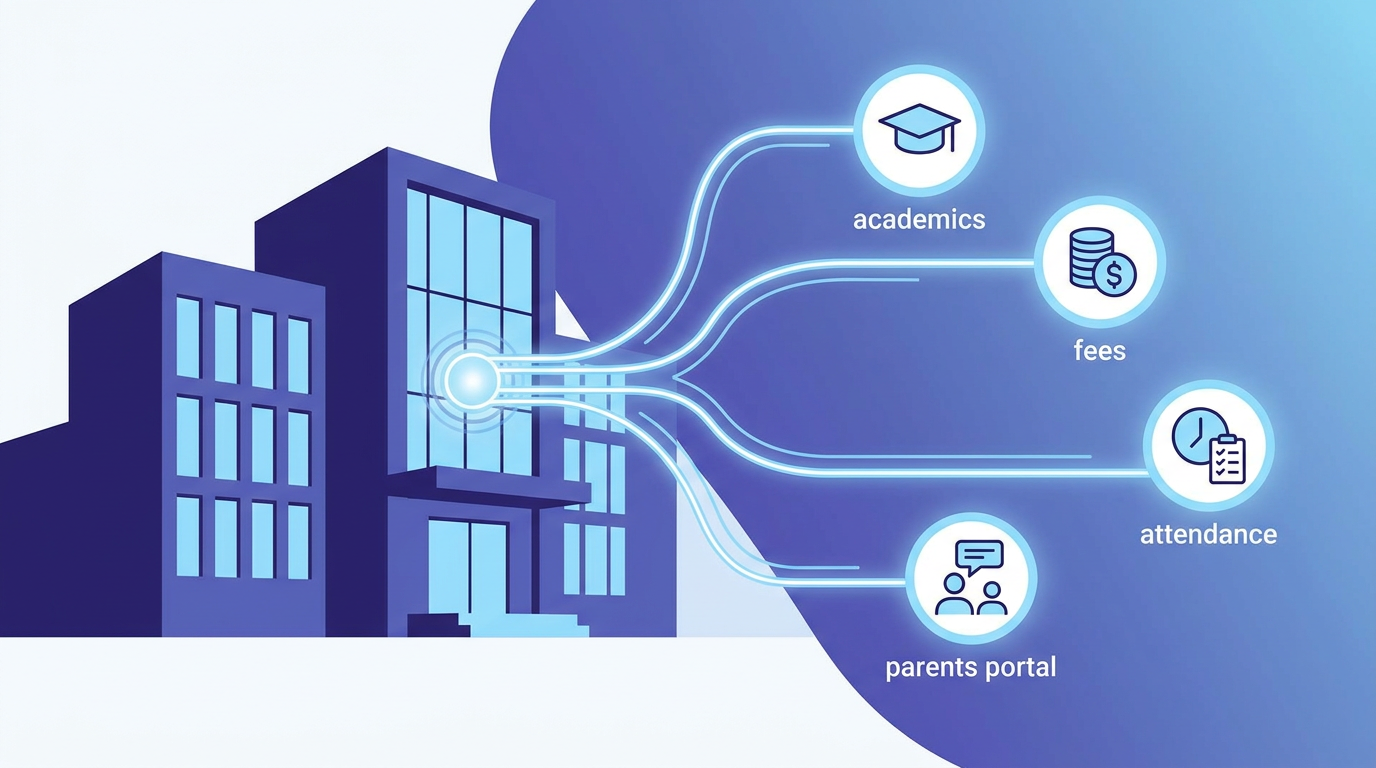
A unified school management system (ERP) acts as the central nervous system of your school. It unifies all stakeholders—owners, principals, teachers, accountants, parents, and students—under a single, secure cloud-first platform.
1.1 Absolute Administrative Efficiency
When a student is registered in a unified system, their record propagates globally in real-time. The fee module instantly generates their custom billing ledger; the transport module assigns them to their bus route; their name appears on the class teacher's attendance checklist; and their parents receive their secure login credentials automatically. A single point of data entry, zero redundancy, and absolute consistency.
1.2 Reclaiming Teacher Instruction Time
Teachers enter education to teach, not to perform clerical tasks. A unified system automates their heavy administrative burdens:
- Attendance in Seconds: Teachers mark attendance on a mobile web console in under a minute, with automated alerts sent to absent students' parents instantly.
- Digital Grading ledgers: Marks entered for class tests aggregate automatically into term-end report cards, eliminating the need to copy grades by hand.
- Structured Lesson Planning: Sharing homework assignments, files, and study resources takes a few clicks, automatically notifying students on their portals.
1.3 Professional Parent Engagement
Modern parents are digital natives who expect a seamless, professional experience from their children’s school. They do not want to wade through messy WhatsApp chats or carry cash to the school counter.
A unified portal provides parents with a clean, branded console where they can pay fees securely via UPI, track their child's attendance trends, view continuous assessment progress, and access official school announcements and homework logs. This level of professional transparency significantly elevates the school's brand and parent satisfaction.
2. Selecting the Best School ERP for 2026
When evaluating unified software systems, keep these strategic guidelines in mind:
- Prioritize Simplicity and Mobile Accessibility: If the software is heavy, complex, and requires extensive training, your staff will reject it. Look for an elegant, lightweight design that runs smoothly on both office desktops and budget mobile phones.
- Insist on Strict Role-Based Access: Your data security depends on clear boundaries. Ensure you can define exactly what your teachers, fee clerks, security guards, and administrators can see and modify.
- Demand Comprehensive Data Migration: Choose a partner that cleans, structures, and migrates your messy historical spreadsheets and registers into the new system for you, ensuring a smooth, stress-free launch.
3. Why CampusMint is the Logical Progression for Progressive Schools
We built CampusMint as a modern, lightweight, and incredibly intuitive alternative to traditional, over-engineered school ERP systems. We stripped away the unnecessary feature bloat to focus strictly on delivering flawless operational workflows for Indian educators.
Frictional Academics and Batches Management
CampusMint unifies your administrative setup under our **Unified Academics Command Center**. Administrators can configure departments, courses, classes, sections, and subject-teacher mappings from a single, tabbed interface, making what used to be a challenging, multi-day setup chore a simple, one-time task.
Integrated Billing and Cashless Collection
Our fee module coordinates your invoices, fine structures, concessions, and online payments. Parents receive secure UPI payment links, settle bills in seconds, and receive digital receipts automatically, eliminating cash-handling overheads and bank reconciliation queues entirely.
Absolute Real-Time Institutional Oversight
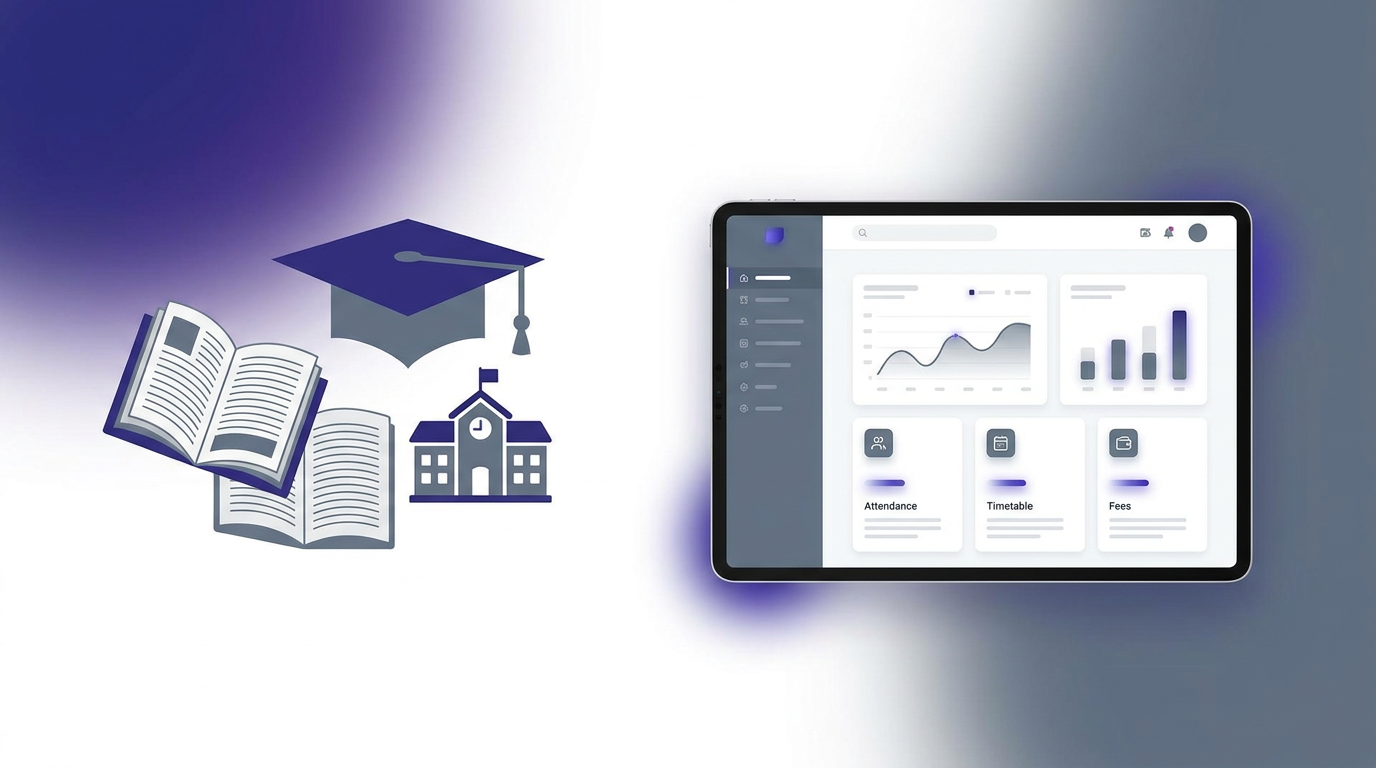
With CampusMint, school leaders enjoy unparalleled visibility. Access real-time attendance analytics, daily fee collection logs, and grade distribution charts through a single, elegant dashboard, giving you the real-time insights needed to manage your institution with absolute confidence.